

The cloud computing conversation has changed significantly over the past few years. Earlier, enterprises selected cloud platforms mainly for scalability, global reach, agility and cost flexibility. Today, those priorities remain important, but they are no longer sufficient. Governments, regulators, boards and customers are asking a deeper question: where does critical data reside, who can access it, who operates the infrastructure and which legal jurisdiction ultimately governs it? This is the context in which sovereign cloud has moved from a specialist requirement for governments into a mainstream enterprise architecture consideration.
Sovereign cloud refers to cloud environments designed to preserve data residency, legal control, operational independence and regulatory compliance within a defined jurisdiction. In practical terms, it is not merely a cloud region located inside a country. A mature sovereign cloud model includes a combination of local data storage, strict identity and access control, encryption key ownership, local personnel controls, auditability, contractual protections, operational segregation and, in some cases, disconnected or air-gapped deployment options. Its central purpose is to allow organizations to consume cloud and AI capabilities while reducing exposure to cross-border data transfer risk, extraterritorial access concerns and regulatory uncertainty.
Recent trends in sovereign cloud
The first major trend is the shift from data residency to full digital sovereignty. Data residency answers the question of where data is stored. Digital sovereignty goes further by addressing legal jurisdiction, administrative access, operational control, encryption key management and dependency on foreign technology providers. This distinction has become increasingly important as enterprises recognize that locating data in a domestic region does not automatically remove legal or operational exposure.
The second trend is the rapid convergence of sovereign cloud and artificial intelligence. Generative AI and large-scale analytics rely on sensitive enterprise data, customer information, intellectual property, telemetry and domain-specific knowledge. As a result, enterprises are increasingly asking whether AI training, inference, prompts, embeddings, logs and model outputs should remain within national or regional boundaries. Sovereign AI infrastructure is therefore emerging as a natural extension of sovereign cloud, especially in regulated industries and public-sector environments.
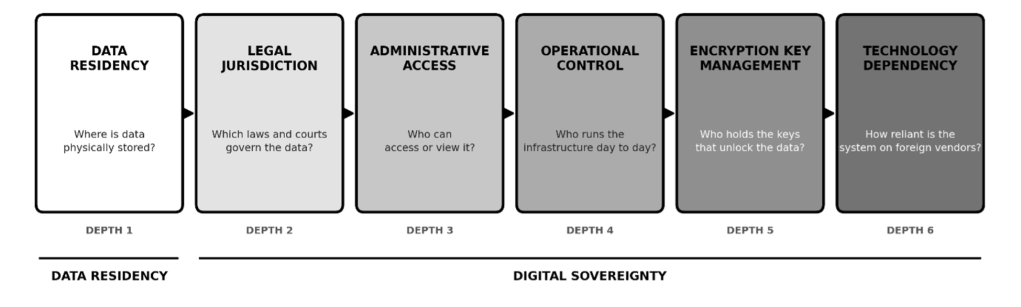
Figure 1: Data residency to digital sovereignty.
Magesh Kasthuri
In the figure above, you can see each layer builds on the ones before it, moving from a storage question to a question of legal, operational and technological independence, showing sovereignty is cumulative.
The third trend is the rise of hybrid sovereign architectures. Few enterprises can move every workload into a fully isolated sovereign environment without affecting agility or cost. Instead, many organizations are adopting a layered model. Highly regulated workloads such as citizen services, payment systems, healthcare records, defense data and critical infrastructure systems are placed in sovereign or private cloud environments, while less sensitive workloads continue to use mainstream public cloud regions. This approach allows enterprises to balance sovereignty, innovation, performance and economics.
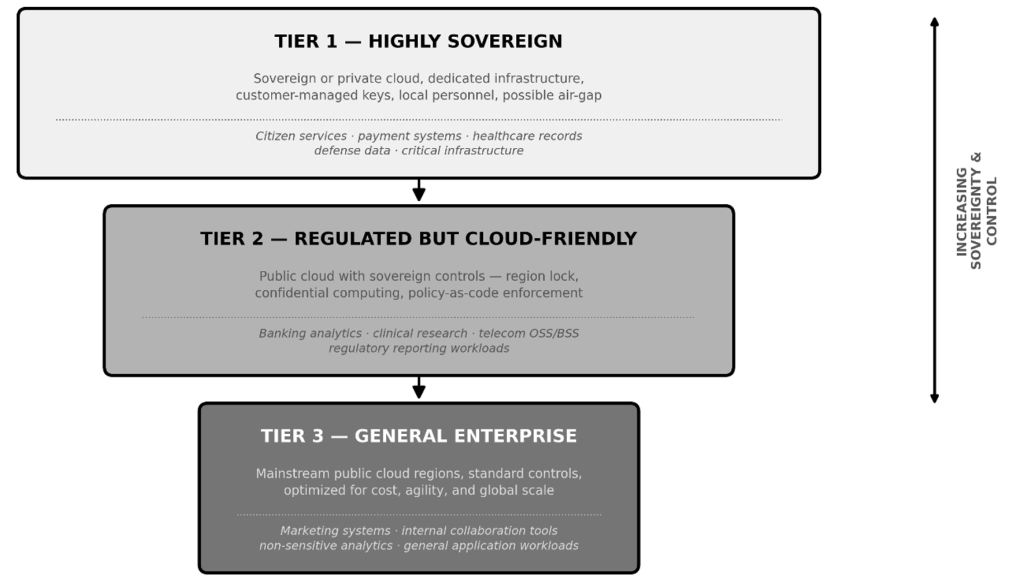
Figure 2: Hybrid sovereign architecture model.
Magesh Kasthuri
In the figure above, hybrid sovereign architecture model is built as a layered approach that balances sovereignty, innovation, performance and economics.
The fourth trend is the growing importance of local partnerships. Hyperscale providers are increasingly working with regional telecom operators, system integrators, government-backed entities and local infrastructure providers to meet country-specific sovereignty requirements. These collaborations help address demands for local operations, domestic ownership, regional support and compliance with national security policies. At the same time, local cloud providers are refreshing their platforms to offer modern automation, cloud-native services, security tooling and managed operations.
The fifth trend is the growing use of policy-as-code and sovereign-by-design controls. Enterprises want sovereignty to be enforced through architecture, not only through contractual language. This is creating demand for region-locked deployment policies, controlled replication, customer-managed keys, confidential computing, localized identity administration, immutable audit trails and automated evidence collection for regulators and auditors.
Industry adoption of sovereign cloud
Government and public sector organizations remain the most visible adopters of sovereign cloud. Their workloads often include citizen identity, taxation, welfare, defense, justice, digital public infrastructure, border management and national emergency systems. These systems carry high public trust obligations and governments increasingly prefer cloud platforms that provide clear control over data location, local administration, audit rights and national continuity.
Banking, financial services and insurance are also strong candidates for sovereign cloud adoption. Banks handle personal financial data, payment transactions, fraud signals, credit records, trading information and regulatory reporting data. Sovereign cloud helps financial institutions align with central bank expectations, operational resilience mandates, cybersecurity requirements and audit obligations. It also enables safer use of AI for fraud detection, customer intelligence, risk modeling and compliance monitoring.
Healthcare and life sciences organizations are adopting sovereign cloud to protect patient records, clinical trials, diagnostics, genomics data, medical imaging and public health information. The sensitivity of healthcare data makes jurisdictional clarity extremely important. Sovereign cloud can support secure collaboration, research analytics, hospital modernization, AI-assisted diagnostics and telemedicine platforms while maintaining tighter data governance.
Telecommunications providers use sovereign cloud for network functions, 5G core workloads, subscriber data, lawful interception systems, edge platforms and national communication infrastructure. Because telecom networks are often classified as critical infrastructure, sovereignty requirements can influence decisions on hosting, operations, resiliency and supply-chain assurance. Here is a summarized view of various industrial adoption across different use cases.
Manufacturing, energy, utilities and transportation sectors are beginning to view sovereign cloud as part of industrial resilience. Operational technology data, plant telemetry, grid analytics, digital twins, predictive maintenance models and supply-chain intelligence are increasingly valuable assets. For these industries, sovereignty is closely tied to business continuity, cyber resilience, industrial secrecy and national economic security.
Cost implications of sovereign cloud adoption
Sovereign cloud adoption may increase cost when compared with standard public cloud deployment, especially in the early stages. Additional costs can arise from localized infrastructure, dedicated regions, private cloud environments, local operations teams, specialized compliance controls, sovereign connectivity, encryption key management, audit tooling and managed security services. In some cases, organizations may also need to redesign applications to prevent unapproved cross-border replication or dependency on non-sovereign platform services.
However, the cost discussion should not be limited to infrastructure premiums. Enterprises must compare the added cost of sovereign controls with the potential cost of regulatory penalties, reputational damage, business interruption, loss of public trust, failed audits, contractual exclusion from regulated markets and inability to use sensitive data for AI safely. For a regulated enterprise, sovereignty can become an enabler of revenue protection and market access rather than a pure compliance expense.
FinOps discipline becomes essential in sovereign cloud programs. Organizations should classify workloads by sovereignty need, avoid over-engineering low-risk applications, monitor data egress, negotiate transparent pricing, standardize deployment patterns and use automation to reduce operational overhead. A pragmatic cost model normally separates workloads into tiers: highly sovereign, regulated but cloud-friendly and general enterprise workloads. This allows the organization to apply the highest controls where they matter most.
Benefits of sovereign cloud for enterprises
The most direct benefit of sovereign cloud is improved regulatory alignment. Enterprises operating across multiple jurisdictions can demonstrate stronger control over data storage, processing, access and movement. This is especially valuable when serving government clients, regulated sectors or customers with strict data protection expectations.
A second benefit is enhanced trust. Customers, regulators and partners are more likely to support digital initiatives when an enterprise can explain where sensitive information resides, who operates the environment and how access is governed. In sectors such as healthcare, banking, public services and critical infrastructure, trust is not a soft value; it is a commercial and operational requirement.
A third benefit is stronger resilience. Sovereign cloud can support local continuity planning, controlled dependency management, regional disaster recovery and clearer operational accountability. When designed properly, it reduces the risk that geopolitical disruption, foreign legal orders, supply-chain fragility or cross-border service restrictions will affect mission-critical systems.
A fourth benefit is responsible AI enablement. Many organizations hesitate to use AI on sensitive data because of uncertainty about retention, training, inference and cross-border processing. Sovereign cloud provides a more controlled foundation for AI adoption by combining data isolation, model governance, auditable operations and policy-driven controls.
Analyst perspective on future trends
Analyst research indicates that sovereign cloud is becoming a fast-growing part of the cloud market rather than a narrow compliance niche. Gartner forecasts worldwide sovereign cloud infrastructure-as-a-service spending to reach US$80 billion in 2026, reflecting 35.6% growth from 2025 and also notes that sovereign cloud spending could shift a meaningful share of workloads from global to local providers. Earlier Gartner research also projected strong long-term growth for sovereign cloud IaaS, driven by regulatory demand, operational independence and technological autonomy.
Forrester’s recent work on digital sovereignty highlights that organizations are no longer treating sovereignty as a simple data residency issue. Its sovereign cloud platform research emphasizes that different deployment models are required for different risk profiles, ranging from public cloud with sovereign controls to private, partner-operated and disconnected environments. This reinforces an important market reality: sovereignty is becoming a design principle across the IT stack, not a single product category.
IDC’s digital sovereignty research points to regulatory compliance, national and regional legislation, protection against extraterritorial data requests, AI adoption and strategic partnerships as key forces shaping the market. IDC’s infrastructure predictions also caution that sovereignty programs can add cost and complexity, requiring stronger data classification, governance, security controls, partner ecosystems and skills development.
Everest Group’s research frames sovereign cloud as closely connected to sovereign AI, enterprise autonomy, data governance and operational control. Its European sovereign cloud analysis describes a market being shaped by geopolitical tension, stronger privacy mandates, concerns about foreign surveillance laws and the need for clearer sovereignty frameworks across data, operational and technical dimensions. Everest Group’s broader private cloud research also indicates that AI, automation, workload repatriation, hybrid-first strategies and sovereignty mandates are increasing demand for controlled cloud environments.
Conclusion
Sovereign cloud is best understood as a response to a broader shift in enterprise technology: the movement from borderless cloud consumption to governed digital autonomy. It does not reject public cloud innovation; rather, it asks cloud platforms to operate within clearer legal, operational and architectural boundaries. For enterprises, the strategic question is not whether every workload must become sovereign. The better question is which data, systems, AI workloads and business processes require sovereign protection and how that protection can be delivered without slowing innovation.
The future of sovereign cloud will likely be hybrid, policy-driven, AI-aware and industry-specific. Organizations that treat sovereignty as an architectural capability will be better positioned than those that approach it as a last-minute compliance checkbox. The winners will be enterprises that build a balanced operating model: global where possible, local where necessary and sovereign where trust, regulation and resilience demand it.
This article was made possible by our partnership with the IASA Chief Architect Forum. The CAF’s purpose is to test, challenge and support the art and science of Business Technology Architecture and its evolution over time as well as grow the influence and leadership of chief architects both inside and outside the profession. The CAF is a leadership community of the IASA, the leading non-profit professional association for business technology architects.
This article is published as part of the Foundry Expert Contributor Network.
Want to join?
Read More from This Article: Sovereign cloud and digital autonomy: Industry trends and what’s next
Source: News

