

“Claim your ground, lead your business” is the overarching motto of this year’s German-speaking SAP User Group (DSAG) congress — a slogan the organizers say aims to bring SAP’s technological vision in line with the concrete challenges faced by its customers, complete with a striking Western motif.
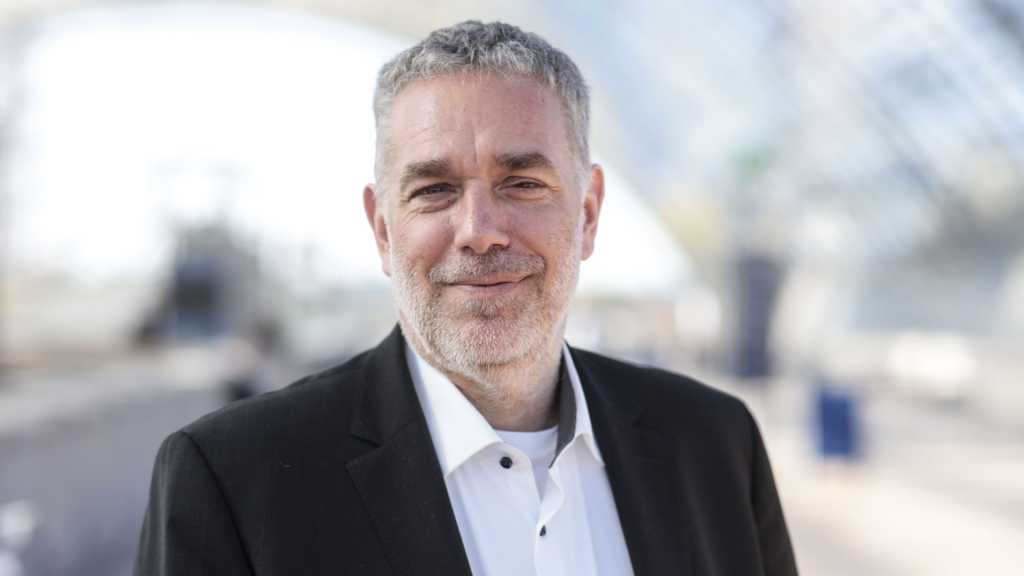
The congress, in its 27th year, kicked off with a keynote from outgoing CEO Jens Hungershausen, who underscored the theme, telling the more than 6,000 participants that, in a time of constant change, they — as the companies and organizations who depend on their SAP systems to operate — must consciously define their own scope of action. It’s about acting autonomously, finding one’s own pace, taking responsibility, and making well-founded decisions, he said.
Referring to a saying often attributed to Henry Ford, Hungershausen explained there are always three possibilities: Love it, change it, or leave it — a principle that can readily be applied to the SAP ecosystem.
Based on the results of the DSAG investment survey from early 2026, Hungershausen outlined the decision-making dilemmas many user companies currently face.
Unclear added value of S/4HANA migrations
First, there’s the end-of-maintenance dilemma for customers of older SAP versions: According to the survey, 54% of the companies still use SAP ECC or even SAP Business Suite, even though standard maintenance for SAP ECC expires at the end of 2027. This deadline forces many companies to migrate to S/4HANA, often creating a conflict between unclear business benefits and high investment costs, according to Hungershausen.
At the same time, questions remain around the appropriate operating model. SAP’s preferred approach is the cloud — specifically the public cloud. However, when it comes to S/4HANA, this currently plays a minor role for DSAG companies.
“For us at DSAG, one thing is clear: Cloud is the future. In reality, however, S/4HANA On-Premise and hybrid architectures are the everyday reality for many of our members, and SAP has to accept that,” Hungershausen said.
The DSAG’s corresponding demand to SAP: Key innovations must not be reserved exclusively for cloud customers.
Here, Hungershausen described SAP’s announcement at Sapphire — that selected AI scenarios would also be available to SAP ECC and S/4HANA On-Premise customers as part of Rise with SAP — as merely a first step in the right direction. Companies using S/4HANA locally also pay maintenance fees and can therefore expect a corresponding level of service, he pointed out — especially considering the maintenance commitments extending until 2040.
“We expect economic fairness, meaning fair, transparent, and comprehensible costs and licensing models. And that without constant changes and impractical metrics,” the full-time MEGA CIO demanded.
AI between gold rush and reality
Another topic concerning SAP users is artificial intelligence. At this year’s Sapphire conference, the Walldorf-based company announced its “Autonomous Enterprise” vision, in which customers’ business processes would be largely controlled independently by agents.
From DSAG’s perspective, SAP’s vision points in the right direction; however, its implementation still needs to prove itself in everyday customer use.
“The technology for this exists. Yet the gap between vision, available technology, and practical application is widening,” Hungershausen explained. For user companies, therefore, the crucial factor is not how big the next innovation promise is, but rather which solutions can be used productively, securely, and economically.
“AI, gen AI, and automation solutions must be measured by whether they support robust use cases, actually improve business processes, and can be integrated into existing SAP and non-SAP landscapes without disproportionate effort,” said the DSAG chairman.
AI is not yet being used across the board among surveyed organizations. According to the DSAG’s investment report, 43% of respondents had implemented AI use cases when surveyed in January. The vast majority of these were based on non-SAP solutions.
“Companies are simply doing a better job of providing easy access to AI,” Hungershausen said, remarking on those survey results. For further investment decisions, companies need clarity about which SAP solutions are available, what level of maturity they have reached, and under what conditions they can be used productively.
“Despite all the technological dynamism, a careful alignment with operational reality is necessary. Product maturity, integration capability, explainability, governance, security, and economic viability must be assessed,” he said.
This also applies to Joule Work and Joule Work Desktop — interesting approaches from the user group’s point of view, although reliable customer experiences with the AI assistants are still pending.
The DSAG chairman reiterated his demand, also in connection with AI, that there should be no link to cloud contracts. The use of artificial intelligence must become easier in existing SAP landscapes; a restriction to cloud contracts is not an option for DSAG.
In terms of data quality — a prerequisite for successful AI projects — SAP fares better. The company is consistently expanding its portfolio in this area, explained Hungershausen, referring to the acquisitions and investments in Prior Labs, Dremio, and Reltio. SAP is pursuing a clear goal here: a complete value chain for the enterprise environment, from clean master data in a clear business context to AI results that are comprehensible.
But for this to generate sustainable added value, the announcements would need to be based on mature solutions featuring clear, reliable roadmaps, Hungershausen said. Transparency regarding technical and economic dependencies, implementation costs, and licensing models is essential. Solutions must reduce the complexity of system landscapes, not increase it.
Reduce complexity
“Complexity in the SAP environment is part of our daily routine,” Hungershausen noted. However, complex system landscapes generally lead to higher costs — for example, through increased operational and testing efforts, reduced flexibility and responsiveness, dependence on personnel with specialized knowledge, or security risks arising from complex attack surfaces. In addition, there would be more complex licensing models and more elaborate data management.
The shared task of SAP, its partners, and its customers is therefore to reduce complexity rather than create new complexity, according to the DSAG chairman. “SAP has created a good foundation for this with its AI North Star architecture and suite capabilities. However, there is still room for improvement, for example, in the area of document management,” he added.
In general, the DSAG demands a reliable transformation path from SAP that includes employees and doesn’t overwhelm organizations.
“The gap between vision, existing solutions, and real customer value must close. It must not widen further,” said Hungershausen. He recalled SAP CEO Christian Klein’s promise at the 2023 DSAG annual congress not to leave any customer behind: “That’s exactly what we expect.” At the same time, user companies themselves must define their strategy and solve fundamental problems instead of constantly fighting symptoms.
The guiding principle: “Fix the system, not the symptom.”
A summary of DSAG’s demands:
S/4HANA On-Premise
- Freedom of choice regarding the operating model
- Accept S/4HANA On-Premise as a reality
- No artificial discrimination against on-premises customers
- Reliable maintenance and investment protection
Artificial Intelligence
- Lower barrier to entry for AI usage
- No tying of AI to cloud contracts
- Balancing cost-effectiveness and innovation
- Clear contractual provisions for AI use
Data Quality
- Product maturity, transparency, and planning certainty
- Integration into existing architectures
- Transparent licensing models
- Reduction of system and process complexity
Complexity
- Harmonized product portfolio
- Clear and reliable integration and architecture strategy
- Making complexity more transparent and manageable
Transformation
- Concrete, understandable, and realistic transformation paths
- Effective support for transformation projects
- No organizational overload
Read More from This Article: SAP customers seek renewed control over their ERP fate
Source: News