

As we look head to 2026, corporate IT strategies are evolving at unprecedented speed. Generative AI, increasingly sophisticated cybersecurity threats, and the strategic use of data are no longer peripheral—they are reshaping the very core of business operations.
Today’s CIOs are expected not merely to deploy technology, but to orchestrate business transformation and sustainable competitive advantage through it.
To better understand where enterprise IT is heading, CIO.com Japan gathered perspectives from leading CIOs, CTOs, and CAIOs across major Japanese corporations. Here, we present their views on the IT trends that will define 2026—and the actions organizations must take to stay ahead.
General Motors Japan
Nobutaka Buniu
CIO, Strategic Market Alliance & Distributor Region

General Motors
AI-Driven Strategy: Balancing Governance and Flexibility
As AI-powered business models become standard, organisations will shift from experimentation to purpose-driven AI deployment. In this environment, strengthening governance—ensuring transparency, accountability, and ethical use of AI—will be critical.
At the same time, CIOs must create environments that allow employees to use AI flexibly to boost productivity and creativity. Achieving this balance requires concrete institutional frameworks and continuous education to prevent burnout and protect work–life balance.
From an IT architecture perspective, we emphasize the need to redefine every layer—from platforms to applications—with AI as a built-in assumption. As service specifications and components rapidly evolve, companies must continuously refresh their systems while preserving flexibility.The AI Agent Revolution: Redefining Manufacturing and Office Work
Kanadevia Corporation
Munenobu Hashizume
Director and Managing Executive Officer, Head of ICT Promotion Division
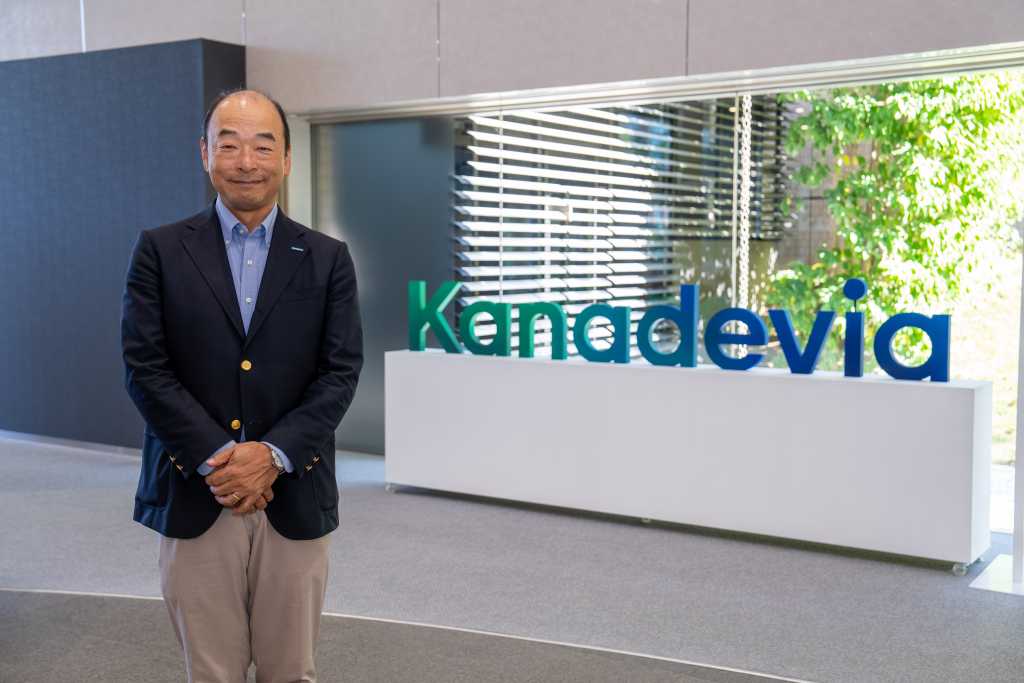
Kanadevia Corporation
The AI Agent Revolution: Redefining Manufacturing and Office Work
We believe the most important capability in 2026 will be mastering “AI agents.” While generative AI is already transforming quality, safety, and productivity in manufacturing, the true challenge lies in building company-wide platforms that enable employees to fully leverage AI agents.
These agents will not only transform shop-floor operations but also dramatically reshape white-collar work in HR, accounting, and general administration. Organizations will increasingly seek IT solutions tailored to AI agent platforms—and Kanadevia is positioning itself squarely in that direction.
Kansai Electric Power
Akiho Ueda
Director, Head of IT Strategy Office

Kansai Electric Power
From “AI Agents” to “AI Partners”
If 2025 marked the emergence of AI agents, we see 2026 as the year organizations redefine what true collaboration between humans and AI looks like.
Which tasks should be delegated to AI? What should humans continue to own? The answers will differ by industry, business model, and DX maturity. However, the companies that identify and implement their optimal model of “human–AI collaboration” will gain lasting competitive advantage.
J. Front Retailing
Taiichi Nomura
Executive Officer, Head of DX Promotion Department

J. Front Retailing
Data Readiness Will Separate Winners from Laggards
As AI adoption accelerates across enterprises, the biggest differentiator will not be the tools themselves, but the quality of data preparation. We warn that AI agents will expose significant gaps in organizational readiness, particularly in how well companies have structured and governed their internal data environments.
In 2026, the true outcome of the AI agent era will be determined by who invested early in data foundations.
Iris Ohyama / Iris Robotics
Yutaka Yoshida
Executive Officer, Head of Robotics Business Division / President & CEO

Iris Ohyama / Iris Robotics
The Rise of Physical AI: When Robots Become Business Partners
We predict that 2026 will mark the dawn of the “Physical AI” era, where AI-powered robots become decisive factors in corporate competitiveness. With Japan facing rapid population decline and severe labor shortages, the government is positioning advanced robotics and AI as national strategic technologies.
Across manufacturing, logistics, and healthcare, robots are evolving from simple labor-saving devices into true productivity partners. Iris Ohyama plans to accelerate the real-world deployment of Physical AI through AI-enabled robotics, helping transform workplaces across industries.
Read More from This Article: Reading the 2026 IT Landscape: Insights from Japan’s Leading CIOs
Source: News