

Microsoft used its Fabric + SQL European Community Conference in Barcelona today to unveil a new vision for its customers’ agentic future.
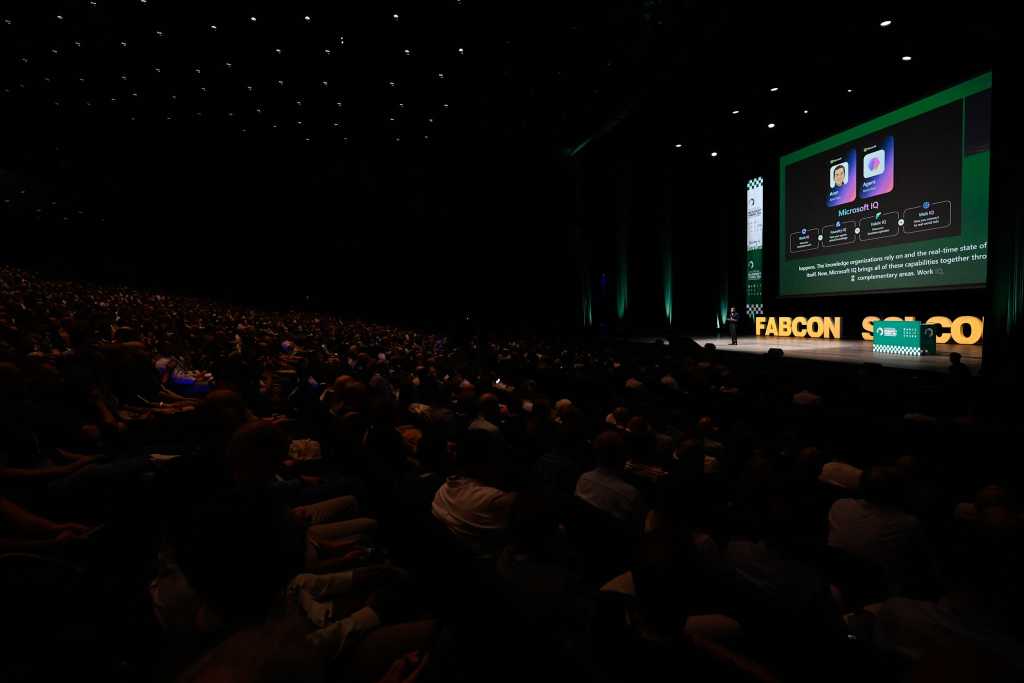
Before a crowd of more than 5,000 people from 71 countries at the Barcelona International Convention Centre (CCIB), the company announced a comprehensive set of new features across Microsoft Fabric, Power BI, OneLake, and Azure SQL. The theme: Microsoft wants data, its business meaning, and artificial intelligence to evolve toward a unified platform.
Arun Ulag, executive vice president of Azure Data, kicked off the convention with some key data. Fabric boasts over 40,000 customers, 2.6 million active users, and certifications in this area are the fastest growing within the Microsoft ecosystem. Meanwhile, SQL continues to be a core technology for enterprise workloads, used by over 90% of Fortune 500 companies.
But to get the most out of AI, Microsoft’s goal is to make the technology part of its customers’ core processes, and this is where the key word of FabCon comes in: context.
Organizations, Arun Ulag, need more than just AI models and agents: They need reliable data, shared business definitions, operational knowledge, security, and governance. At the center of that effort is Fabric IQ, a shared intelligence layer that connects OneLake data, Power BI semantic model metrics, and context from ontologies and real-time intelligence.
Fabric IQ integration with the new Microsoft Copilot
One of the most significant announcements Microsoft made today in Barcelona is the integration of Fabric IQ with the new Microsoft Copilot. The intention is for Microsoft’s assistant to work not only with generic information, but with a shared business view built on each organization’s data and knowledge.
Fabric IQ is now generally available in Copilot Chat and Cowork, with no additional token costs, while its integration with the new Code experience will be coming soon through the Frontier program. For Power BI users, the business definitions, metrics, and insights embedded in their semantic models can also be used directly as the basis for Copilot’s responses and actions.
This move is significant because it changes the traditional role of the data platform. It’s no longer just about storing, integrating, and analyzing information. The goal is to transform data into a business context that is understandable to both people and AI agents. And in doing so, it answers the question: AI can read your data, but does it truly understand your business?
Microsoft
The evolution of Power BI: Bringing agent creation to Microsoft Power BI Desktop
The announcements didn’t end there. Up to a dozen spokespeople took to the stage to talk about the latest developments from a company that, in Europe, also received public support from technology executives of companies across the continent, such as SAP and Chanel.
The second major set of new features affects Power BI. Microsoft has announced the ability to create agentic applications directly from Power BI Desktop. Users can start with a trusted semantic model, describe the application they need using natural language, generate it, preview it, modify it, and publish it to Fabric.
The conceptual leap is significant. Power BI was born as a business intelligence tool designed to transform data into information, and later incorporated conversational capabilities through Copilot. Now, Microsoft aims to enable users to move from analyzing information to creating actionable applications based on that same data.
The company is also expanding Fabric applications to facilitate the transition from prototype to production. Developers can connect applications with Fabric data stores, SQL databases, lakehouses, and Power BI semantic models without duplicating data and while maintaining existing permissions and business logic. New features include a TypeScript backend, Secret Store, PostgreSQL support, private access by default, and built-in usage and performance metrics.
OneLake is evolving into an open data network
Another key focus of the conference is OneLake. As organizations scale AI, simply connecting data is no longer enough. Copilots and agents also need business context, including terminology, relationships, instructions, and domain knowledge, to provide relevant answers and take informed action.
Microsoft OneLake will provide an open foundation for connecting data across clouds, applications, and platforms. The company has presented it as an evolution toward an open data network where data products can be reused for analytics and artificial intelligence.
GD | Foundry
More additions
Microsoft has also introduced the Fabric data engineering agent, designed to automate complex tasks such as migrations, lakehouse modernization, optimization, ETL processes, and data preparation. New Copilot capabilities in Real-Time Intelligence are also arriving, enabling the creation of dashboards using natural language and the automation of Eventhouse administration tasks. The operations agent incorporates root cause analysis and recommendations for resolving incidents.
Furthermore, it has expanded Fabric IQ to include capabilities for generating ontologies from semantic models, OneLake data, and context documents. Organizations can now define rules in natural language and reuse Power BI metrics, providing people with a common business meaning and thereby improving the accuracy of their responses.
In terms of expenses, Microsoft now includes on-demand billing, which enables customers to pay for the computing capacity used, and zero provisioning of Fabric and OneLake.
In the database realm, Database Hub offers a centralized control plane for SQL Server, Azure SQL, PostgreSQL, Cosmos DB, and SQL Database on Fabric. Database agents for SQL and PostgreSQL are also coming soon.
Finally, Azure SQL Database Hyperscale incorporates DiskANN vector indexes, geared towards semantic search and RAG applications. Microsoft rounds out the announcements with the general availability of SQL Server on Azure On-Premise and its offline operations, strengthening support for on-premises, edge, and sovereign environments.
One platform, one context, and a new generation of agents
The announcements outline a significant evolution of Microsoft Fabric, which aims to enhance real-world efficiency in the age of agents. To achieve this, Microsoft is building an architecture around Fabric where OneLake connects data; Power BI provides semantic models and metrics; Fabric IQ incorporates business context; Copilot and agents utilize that knowledge; and observability, governance, and database tools provide the operational layer necessary to keep the entire system running smoothly.
Microsoft’s own conclusion summarizes the paradigm shift: Transformation through AI will not depend so much on the number of agents an organization is able to create as on its ability to understand the business and collaborate to achieve results.
Therefore, the technological battle emerging from Barcelona is not being fought solely in the realm of AI models. It is increasingly being fought in the realm of data, context, semantics, governance, and the infrastructures that enable this intelligence to be truly useful.
Read More from This Article: Microsoft rewires AI’s context layer for business
Source: News