

Recent IDC research underscores the importance of recruiting and hiring AI skills, as frequently identified in CIO.com. This trend will continue as many organizations compete within their industries and against the big tech firms for scarce AI talent.
The trend for organizations to invest in GenAI-related projects is unmistakable. From IDC’s April 2025 CIO Sentiment Survey, a mere 1% of IT leaders have no plans for GenAI implementations. When 437 global IT leaders were surveyed in April 2025, they identified AI and automation as the area that will receive the most investment over the next 12 months, followed by cybersecurity and risk management. IT leaders also identified AI and automation as the top area that will have the greatest impact on business outcomes over the next 12 months. Over 90% of CIOs are actively using or plan to implement AI projects, as shown below.
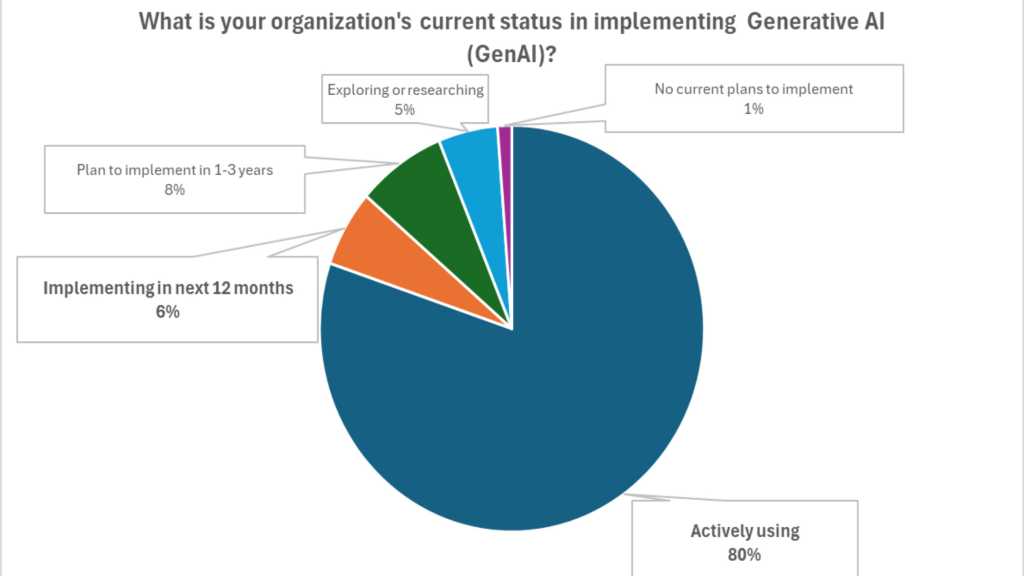
IDC’s 2025 CIO Sentiment Survey, n = 437
Hiring skilled AI workers is one of the biggest challenges for organizations. Globally, IT leaders cite their primary talent challenges as “finding appropriately skilled professionals” (35.5%) and “retaining talent” (15.1%). The most difficult skills to recruit and retain are AI and cybersecurity.
The youngest workers, who have recently graduated from colleges and universities, may be the most skilled in using GenAI, although they have the least work/domain experience.
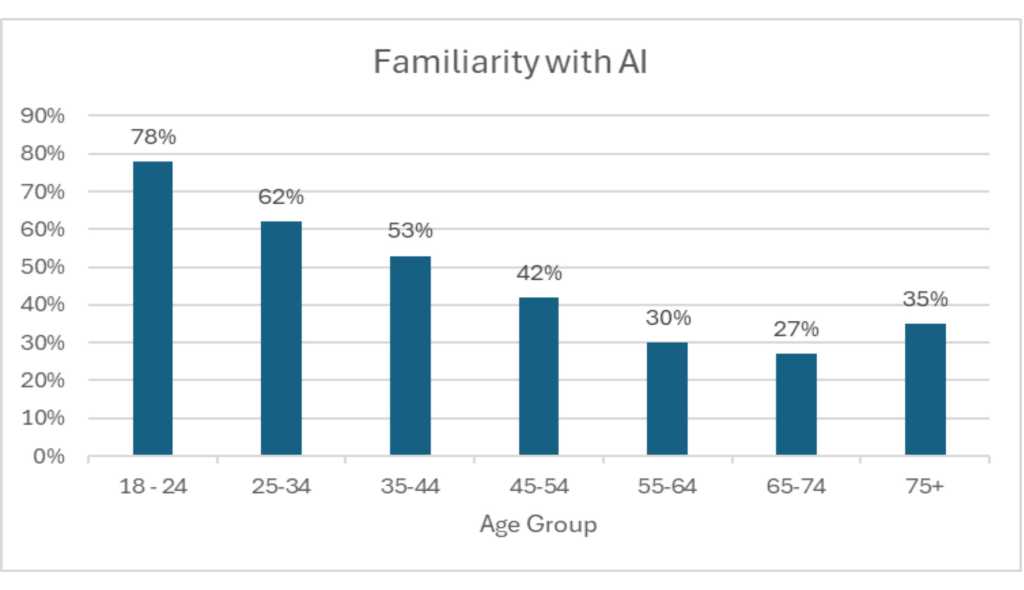
Research from Toronto Metropolitan University (TMU) shows that GenAI familiarity is strongest in younger age groups. Familiarity with GenAI tools in the workplace drops significantly as age increases.
Additional TMU data from student work-terms shows that 26% of employers expect students to work with AI, while a much large percentage of students are actually using AI in the workplace, with only 21% of students responding that they do not use AI in the workplace. The charts below depict this data.
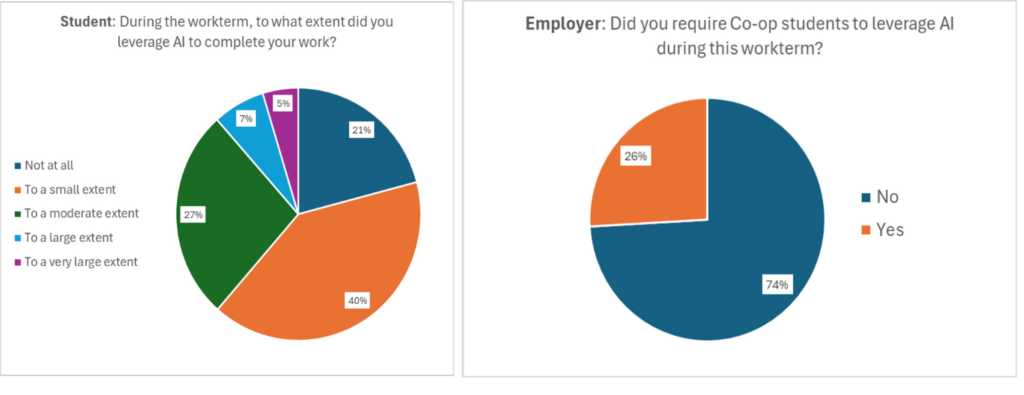
“Early Talent Insights,” Ted Rogers School of Management, Toronto Metropolitan University, November 2025, n = 834
The most common usage for GenAI is to help with communication and writing, according to the TMU data. The breakdown in GenAI usage is as follows:
| GenAI usage reported by employer | Percentage |
| Communication/writing: drafts, summaries, minutes, etc. | 36% |
| Research | 16% |
| Coding and data management | 11% |
| Content creation (e.g., website) | 11% |
| Other/not specific | 25% |
With so many young people with AI talent and interest in using GenAI at work, what challenges do CIOs face hiring them into the organization? There are many.
Young people typically lack a business context and, more importantly, are still developing critical thinking skills. GenAI tools can be very powerful, but without context or the ability to challenge the LLM output, GenAI can be dangerous.
Research published in 2025 is building the case that AI may reduce cognitive capabilities. Researchers at Carnegie Mellon University, at the Swiss Business School, and at MIT have come to the same conclusion: Critical thinking skills are required to manage AI, so that users can challenge and not blindly accept the GenAI results. Researchers found that knowledge workers reported a decrease in critical thinking when using GenAI tools. The use of GenAI reduced the cognitive effort needed for information gathering and for the organization and presentation of information. Research at the Swiss Business School found a “significant negative correlation between frequent AI tool usage and critical thinking abilities.” Increased trust in AI, particularly in younger persons, leads to greater cognitive offloading, which in turn reduces critical thinking skills and increases the risk of accepting recommendations without scrutiny.
This is the CIO dilemma: Young hires who are most familiar with GenAI are the ones with the least experience and critical thinking skills.
IDC recommends that CIOs hire those with critical thinking skills and expect GenAI capabilities in young candidates. The main challenge is validating AI capabilities while intensely probing for critical thinking skills, which are harder to find in AI-conversant hires. The hiring processes should include scenario and case testing to see which candidates develop an independent strategy to resolve ambiguous problems versus those who rely solely on GenAI.
Technology leaders must ensure all employees — new and established — are aware of and comply with a strict AI governance framework to keep AI usage within ethical and legal bounds. And lastly, new hires should be mentored by experienced staff to further develop critical thinking skills within the organization. Knowledge workers should be trained to think critically when using GenAI, including cross-referencing outputs and assessing relevance.
_________________
Learn more about IDC’s research for technology leaders OR subscribe today to receive industry-leading research directly to your inbox.
International Data Corporation (IDC) is the premier global provider of market intelligence, advisory services, and events for the technology markets. IDC is a wholly owned subsidiary of International Data Group (IDG Inc.), the world’s leading tech media, data, and marketing services company. Recently voted Analyst Firm of the Year for the third consecutive time, IDC’s Technology Leader Solutions provide you with expert guidance backed by our industry-leading research and advisory services, robust leadership and development programs, and best-in-class benchmarking and sourcing intelligence data from the industry’s most experienced advisors. Contact us today to learn more.
Dr. Ron Babin, an adjunct research advisor for IDC, is a senior management consultant and professor who specializes in outsourcing and IT management issues. Dr. Babin is a professor in IT management at the Ted Rogers School of Management at Toronto Metropolitan University.
Read More from This Article: When hiring AI skills, focus on critical thinking
Source: News