

For Chief Digital, Technology, Information Officers and all enterprise and government leaders, the pivotal question isn’t if Artificial Intelligence (AI) will redefine your organisation, but how swiftly you can adapt to lead this transformation.
Generative AI, large language models (LLMs), and advanced machine learning are rapidly reshaping competitive advantage, revolutionising citizen services, and fundamentally altering digital operating models. From instant language translations to next-generation decision support systems, these breakthroughs share a singular, critical dependency: cutting-edge AI infrastructure.
Welcome to the age of the AI Factory purpose-built data centres engineered to manufacture intelligence at unprecedented scale. This isn’t a distant ambition; it’s a strategic, board-level imperative demanding immediate action.
Legacy infrastructure wasn’t built for this future
Traditional data centres, optimised for basic websites and email, are simply unequipped for the demands of 600kW racks of GPU-accelerated AI.
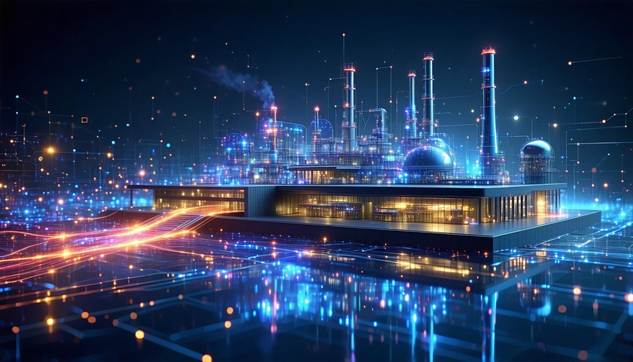
Today’s AI ecosystems impose exponential demands on infrastructure:
- Power: AI systems now draw an astonishing 30 to 600kW per rack, up to 10 times the load of typical enterprise environments. In the AI era, megawatts equal tokens. The ability to convert power into intelligence is now a hyperscaler metric.
- Cooling: Standard air-cooling systems buckle under the intense thermal loads generated by modern GPUs.
- Connectivity: LLM training and complex AI inference necessitate ultra-low latency interconnects spanning thousands of processors for seamless operation.
- Floor loading: GPU-dense racks can exceed 1,500kg each. Legacy facilities often lack the structural design and layout optimisation to support such concentrated hardware density.
- Power redundancy and resilience: Traditional backup systems were never built for multi-megawatt, always-on GPU clusters. AI workloads require fault-tolerant designs that ensure uninterrupted operation and revenue continuity.
- Orchestration and stack integration: AI Factories must support GPU scheduling, containerisation, and model lifecycle management at scale, functions legacy environments struggle to integrate.
- Sustainability and compliance: Legacy facilities often lack ESG-aligned infrastructure, now critical for enterprise and government workloads.
Attempting to retrofit existing facilities inevitably leads to escalating costs, crippling performance constraints, and critical deployment delays. Legacy data centres fall short not only in power, cooling, and connectivity, but also in structural integrity, resiliency, orchestration, and sustainability.
For organisations still tethered to outdated infrastructure, AI becomes inefficient, unpredictable, and unscalable, severely undermining the technology’s competitive edge and long-term viability.
The new compute mandate: Three catalysts reshaping AI infrastructure
Global infrastructure is entering a once-in-a-generation transformation, driven by the convergence of three macro forces that demand urgent executive attention.
1. Next-gen silicon requires first-principles design
The leap to frontier chips, like NVIDIA Blackwell and Hopper, is more than an upgrade; it’s a fundamental architectural shift. These GPUs require ultra-high-speed interconnects, extreme-density rack configurations, and advanced liquid cooling. Traditional data centre environments were never engineered for this level of thermal, electrical, and network intensity. The modern AI stack now begins at the silicon and ripples outward to facility-wide reinvention.
2. Power density has become the competitive frontier
Legacy racks topped out at 5 to15kW. AI-native workloads are pushing toward 600kW per rack and beyond. This escalation rewrites the playbook for energy distribution, redundancy, cooling topologies, and spatial planning. NEXTDC is already designing infrastructure that supports these next-gen densities to meet tomorrow’s demands, today.
3. Cooling innovation is now a strategic ESG lever
AI doesn’t just compute, it consumes massive power and generates heat at industrial scale. Efficient cooling is no longer a back-end engineering problem; it’s a frontline enabler of performance and sustainability. Direct-to-chip liquid cooling and immersion systems are now essential, improving throughput per watt while advancing ESG outcomes. For AI infrastructure leaders, cooling is the convergence point of speed, scale, and carbon-conscious design.
NEXTDC
A new divide is forming and it’s accelerating.
We’re seeing a really clear split right now, and it’s more than just a minor hiccup; it’s shaping up to be a fundamental divide in the business world.
On one side, you have legacy organisations. They’re grappling with the heavy burden of technical debt, which acts like a massive anchor, slowing down every innovation attempt. On top of that, their AI costs are spiralling out of control, becoming unsustainable, and they’re hitting a wall when it comes to scaling their AI initiatives. It’s like they’re trying to win a race with one foot tied behind their back.
Then, on the other, there are the AI-native organisations. These are the companies that built their operations with AI at their core. They can deploy new AI solutions much faster, operate with incredible efficiency, and grow with remarkable agility. They’re not just keeping up; they’re setting the pace.
This isn’t merely an IT problem to be handled by a specific department. This is a profound structural shift in how competitive advantage is established and maintained, or, unfortunately, how it’s completely lost. The gap between these two groups is widening every day, and it has significant implications for market leadership.
NEXTDC: Built for what’s next
Here’s why leading organisations choose NEXTDC for AI infrastructure at scale:
- Strategic locations: Data centres in every major Australian capital city—close to population hubs and critical network interchanges
- AI-Ready rack densities: Support for up to 130kW per rack today, with liquid cooling available and designs underway for 600kW+
- Cloud-neutral connectivity: Carrier-rich interconnectivity and subsea cable access for ultra-low latency across regions and platforms
- Sovereign compliance: Certified to the highest standards, including ISO and Uptime Institute Tier IV
- DGX-Ready certification: NVIDIA-validated for high-performance AI workloads, with infrastructure optimised for GPU training and inference
- Award-winning excellence: Recognised by the PTC Innovation Awards and Frost & Sullivan for market leadership and innovation
Whether you’re deploying frontier models, scaling sovereign capability, or delivering GPU-as-a-Service, NEXTDC provides the trusted platform to power what’s next.

NEXTDC
Read More from This Article: Why AI Factories matter now: Infrastructure for the new intelligence era
Source: News