

As we look ahead to 2026, corporate IT strategies are entering a decisive phase. Generative AI is no longer an experimental tool; it is becoming the backbone of business processes. At the same time, cybersecurity threats are growing more sophisticated, and the value of enterprise data is being redefined.
To understand how leading organizations are navigating this transformation, CIO.com Japan gathered insights from prominent CIOs, CTOs, and CAIOs across major Japanese enterprises. In this second installment, we explore how AI, data, and organizational redesign are shaping the next wave of enterprise competitiveness.
Ricoh Company, Ltd.
Yasuyuki Nomizu
Corporate Senior Executive Officer, CTO / Head of Security / Head of Technology & Digital Strategy Divisions

Ricoh Company, Ltd
AI-Driven Process Optimization Will Define Corporate Competitiveness
We believe 2026 will mark the full-scale deployment of agent-based AI, accelerating “AI-driven process optimization” and elevating the importance of data platforms and data readiness.
At Ricoh, the ongoing ERP renewal is not just a system replacement—it is a fundamental redesign of business processes to become AI-native. Development and operations are being automated wherever possible, while security is shifting from reactive to preventive models.
As AI becomes deeply embedded in operations, Ricoh is also strengthening AI governance and risk management to ensure trust, resilience, and regulatory readiness.
Ebara Corporation
Hiroyuki Kowase
Executive Officer, CIO

Ebara Corporation
Strategic Workforce Reallocation, Not Just Productivity Gains
We caution that AI should not be viewed merely as a cost-cutting tool. Instead, the real opportunity lies in the “strategic redeployment of human talent” toward new, AI-enabled revenue streams.
True productivity gains require a complete redesign of business functions and workflows—an effort that often demands more time and resources than AI implementation itself. For Ebara, AI is a catalyst for reshaping how work is organized across the enterprise.
Hakuhodo DY Holdings Inc.
Masaya Mori
Executive Officer, CAIO

Hakuhodo DY Holdings Inc.
Entering the Age of AI Agents: Preserving Creativity While Scaling Efficiency
By 2026, we expect AI to evolve into autonomous agents capable of acting independently within business operations. However, this shift brings new risks, including homogenized outputs and diminished human creativity.
To counter these risks, Hakuhodo DY is focusing on AI-ready organizational design, process reengineering, and high-quality data foundations—while ensuring that AI complements the tacit knowledge and creative strengths that define the company’s culture.
In IT, AI-driven development models such as “vibe coding” are transforming how systems are built. We stress the need to modernize architectures to remain flexible in the face of agent-based integration and emerging “physical AI.”
ITOCHU Corporation
Zenichiro Urakami
Executive Officer, Head of IT & Digital Strategy Department

ITOCHU Corporation
2026: The Year AI Becomes a Board-Level Imperative
We predict that AI will be redefined in 2026—from a productivity tool to the very foundation of corporate competitiveness.
Core systems must therefore evolve into “AI-ready platforms” that seamlessly accumulate and expose data for AI utilization. Hybrid cloud management—integrating on-premises and multi-cloud environments—will become mission-critical.
At the same time, AI governance and advanced cybersecurity will be indispensable to protect against emerging threats that exploit generative AI. Ultimately, we see “AI Transformation (AIX)” as a management-wide challenge that demands a fundamental rethinking of business models and decision-making.
Rakuten Group, Inc.
Akihito Kurozumi
Senior Managing Executive Officer, Group CIO & Group CTO
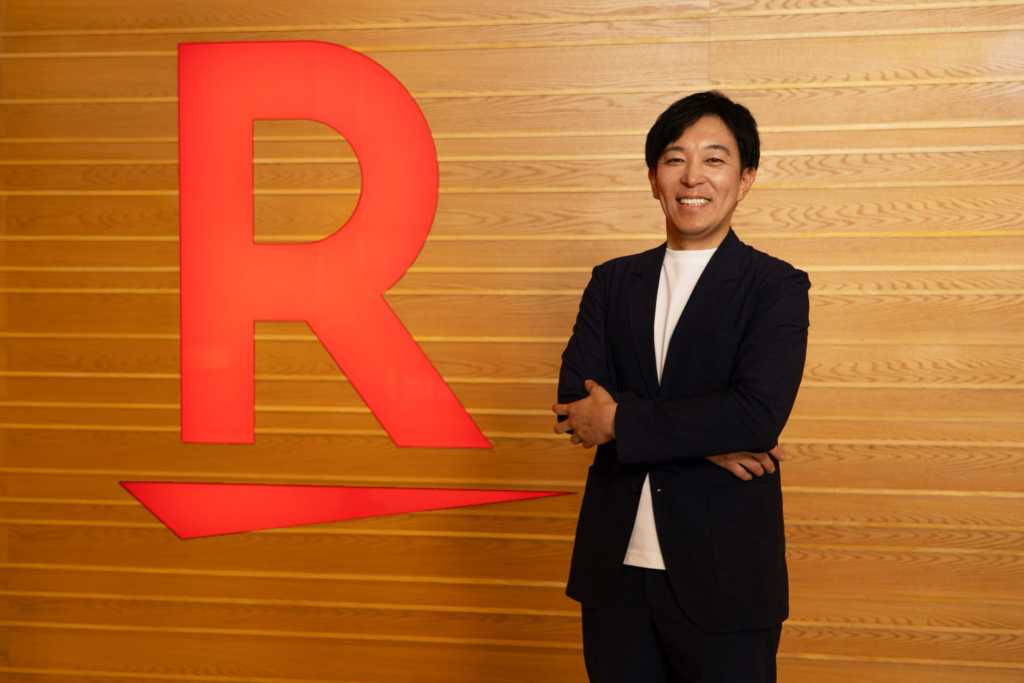
Rakuten Group, Inc
AI Democratization: Data, Technology, and Ethics as the New Trifecta
By 2026, AI will be so deeply embedded in daily life that users may not even realize they are interacting with it. This is the essence of Rakuten’s vision for “AI democratization.”
We highlight three pillars for success in this era: robust data assets, advanced AI technology, and unwavering ethical standards. Leveraging data from more than 70 services, Rakuten’s proprietary AI agents are redefining customer experience across the entire ecosystem—delivering personalization, trust, and security at unprecedented scale.
Read More from This Article: Reading the 2026 IT Landscape (Part 2): Insights from Japan’s Top IT Leaders
Source: News