Every software system charges customers an experience tax.
It may not appear on an invoice, but customers pay it in wasted time, broken flow, repeated work and lost confidence. When that tax exceeds their tolerance, they often leave without telling you why.
At first, customer utilization dips slightly with no clear explanation. Over time, customers begin using competitors’ solutions, which is strange because those solutions offer fewer features and capabilities. All of a sudden, your product becomes the legacy pariah everyone hates because it is no longer recognized for the value it provides due to the friction required to get there.
As tolerance thresholds are surpassed, customers are abandoning loyalties at an increasing pace.
Today, brand loyalty is at an all-time low. PwC’s 2025 Customer Experience Survey found that 52% of consumers stopped using or buying from a brand because of a bad product or service experience, and 29% stopped because of poor customer experience online or in person.
This invisible tax erodes and whittles customer loyalty away with little to no indication of why back to the producer of the product or service. Deficiencies in functional capabilities aren’t always the culprit/root-cause. It’s the last-mile/attention to detail (often found in non-functional requirements – NFR) that burns even the best of efforts.
This is a wake-up call
This is far more than a simple UI complaint. It is a loyalty, revenue and risk-management problem that belongs at the executive table.
Annoyance begins when a product asks customers to absorb more inconvenience than they care to tolerate, regardless of the value of the product provides.
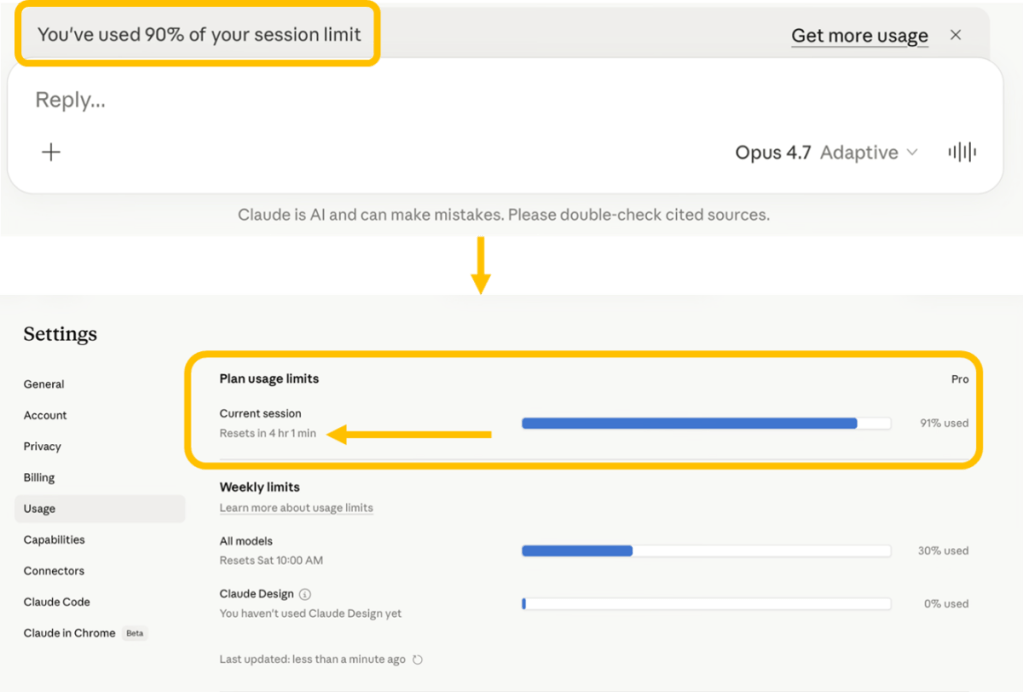
Our first example, Anthropic’s Claude Pro, is a strong illustration of experience-tax friction. The product’s value is clear. The problem is not capability. The problem is interruption. After 3 queries and one illustrative diagram, I received a usage warning. So, I reviewed my usage to discover I must wait four hours to continue.
Jim Wilt
While this is understandable in a free tier, it feels entirely different in a paid tier. It interrupts work, forces tool-switching and changes the customer’s perception from “valuable assistant” to “unreliable workflow dependency.”
This is where real loss hides. What may look internally like responsible revenue control or capacity management can feel externally like broken trust. Customers rarely announce that moment. They simply reduce usage, cancel quietly and move to a competitor with fewer interruptions.
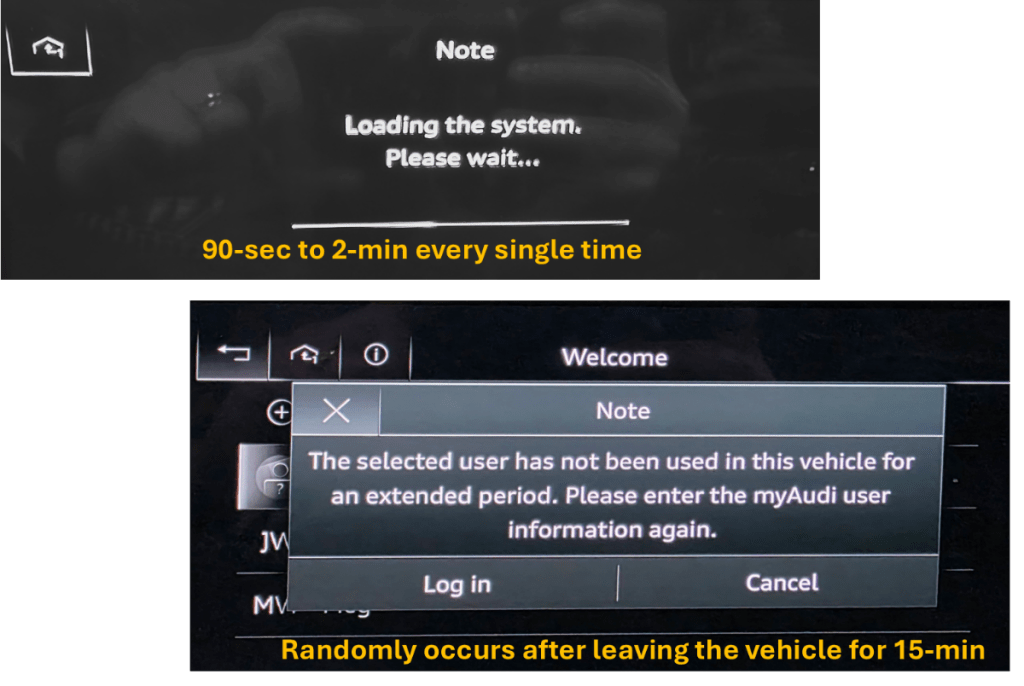
Our next example is NFR friction with the Audi MMI Infotainment System. It creates a different kind of experience tax. A premium vehicle should feel ready when the driver is ready. Instead, long boot times, delayed navigation handoffs from the mobile app and recurring user-profile failures make the vehicle feel less premium at the exact moment the owner interacts with it. None of these failures stop the car from driving. That is precisely why companies underestimate them. They don’t appear catastrophic in isolation, but repeated enough, they redefine the ownership experience.
Jim Wilt
Unfortunately for Audi, it gets much worse. As reported in The Drive, Audi Infotainment Screens Were Bricked for Months by a Bad SiriusXM Update. When you rely on third party vendors to deliver functionality for your products, their mistakes can greatly damage your customer loyalty as Sirius did.
It is important to note: In these situations, the customer does not blame the third-party provider. The customer blames the brand they trusted.
Our final example shows how back-office systems are just as vulnerable to experience-tax friction.
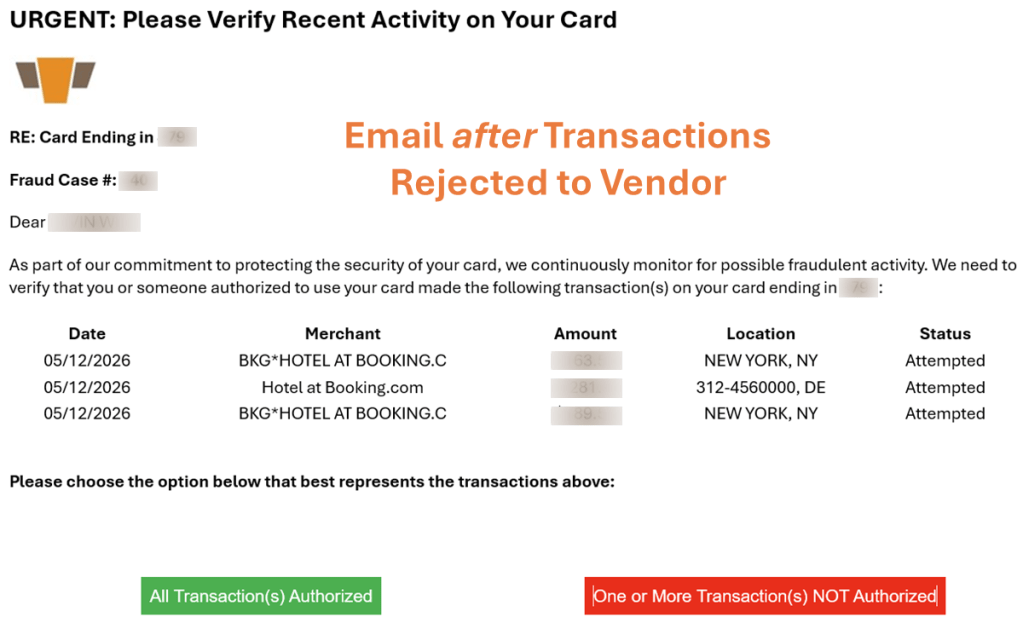
Last year, I booked travel using my TruStone Financial Credit Union credit card. More than half of the hotel and travel charges were rejected and had to be repeated after I manually contacted TruStone to approve the vendors.
I identified the vendors as legitimate and asked that they be added to TruStone’s fraud-detection allowlist. Yet one year later, while booking with the same vendors, I received an identical urgent fraud-verification notice for the same vendors and transactions.
Jim Wilt
At that point, the issue is no longer fraud protection. It becomes customer friction.
A physical visit to the branch, manual intervention and a business card instructing me to call the branch before using the credit card while traveling still provide no assurance that future reservations will process correctly.
The burden has shifted from the financial institution’s system to the customer.
Every software system creates friction and the threshold that costs you customers is much closer than you think.
How leaders can reduce the experience tax
- Acknowledge the tax. Every software system creates friction. Leaders must know which friction customers tolerate and which friction pushes them away. Third-party systems are not exempt. When they fail, your customers still blame your brand.
- Listen where customers are honest. Stop overusing surveys. Mine support tickets, telemetry, app reviews, Reddit, product forums, call transcripts and public sentiment summaries. Customers are already telling you where the experience tax is too high.
- Treat complaints as loyalty warnings. A reported annoyance is not noise. It is often the customer’s final warning before leaving. Responding quickly and respectfully may preserve trust even when the fix takes longer.
- Hold vendors accountable for business impact. Replace token subscription credits with impact-based accountability. If a vendor’s failure causes material loss, the contract should provide material remedies, not symbolic refunds.
Feedback channels matter when they are easy to use and visibly acted upon. Apple Feedback is straightforward and Microsoft has improved Feedback Hub enough to make reporting annoyances much easier. When I reported ad-intrusion friction in the Windows Weather app in March, the issue appeared resolved by April.
Quick response is good. Preventing the complaint is even better.
At T-Mobile, our engineers embedded telemetry that monitored performance, usage patterns and customer experiences. When the system detected behavior likely to create friction, it alerted engineering. Often, teams were able to correct the issue and deploy a fix before the first customer complaint arrived.
Providing an outlet for customers to vent only works if you listen/monitor and respond in a timely manner – proactive resolution is better.
Start with the architectural evidence
You most likely already have much of the data and many of the answers you need. The architecture team you often overlook has likely been tracking customer-friction risks all along. Their artifacts are not just technical documentation; they are living business intelligence.
- Architecturally significant decisions explain why the system works the way it does. They capture the assumptions, trade-offs, alternatives and design logic behind the product. But they should never become permanent defenses of past choices. They are living records that must evolve as real-world usage corrects pre-production assumptions.
- Risk matrices show where friction is likely to appear. They identify mitigation plans, contingency actions, ownership and review cadence. Documenting a risk does not resolve it. Risks must be reviewed and acted on at a pace that matches their volatility and business impact.
- Quality attributes/non-functional requirements often predict customer annoyance before it becomes a complaint. Performance, availability, usability, reliability, latency, resilience and observability are not just back-office engineering concerns. They directly shape customer trust.
This is architectural hygiene. It exists for the full lifespan of the software system, not just during development. When used well, it accelerates diagnosis, guides remediation and helps prevent friction from becoming churn.
Look no further than your own backyard.
Recover without creating more friction
Once customer friction is recognized, uncomfortable business decisions quickly follow.
If the friction was predicted, documented and monitored, resolution is usually less daunting. Unfortunately, that is often not the case. By the time leadership notices the issue, urgency rises, pressure increases and teams are pushed toward fast answers instead of durable fixes.
That is when technical debt grows. Quick-fix, bolt-on solutions may relieve the immediate pain, but they often make the system harder to support, harder to change and more frustrating for customers over time. In short, common recovery practices can make a bad situation worse.
Manual intervention has its place. It can be an effective short-term Band-Aid when logic, judgment and customer empathy are urgently needed. But it should never become the long-term operating model. Too many organizations turn temporary manual workarounds into permanent process debt, shifting burden onto employees and customers while creating more friction.
Long-term fixes often appear costly, disruptive or poorly timed. In many cases, the better path was already rejected earlier and documented in architecturally significant decisions. That leaves leaders with two uncomfortable choices: Continue patching around the problem or reopen decisions the organization once avoided.
More progressive organizations use these moments differently. They treat every pseudo-crisis as an opportunity to innovate.
A better recovery pattern looks like this:
- Use the friction event as an innovation trigger. Treat the issue as more than a defect to close. Use it as a chance to rethink the assumptions, constraints and decisions that created the friction.
- Separate short-term stabilization from long-term redesign. Let one team handle immediate containment. Assemble a different team to explore more durable solutions without being constrained by the pressure of today’s workaround.
- Hold back one historical reference, not the entire original team. Keep one person close who understands the system’s history, decisions and constraints. Their role is to provide context, not defend the choices that led to the problem.
- Empower the recovery team to challenge norms. Give the team executive sponsorship and permission to question previous assumptions. Reporting directly to a C-level leader or VP can reduce internal politics and accelerate decisions that improve customer outcomes.
- Choose teachers, not heroes. The goal is not a one-time rescue. The team should include people who can pass on their thinking, methods and resolution patterns. When the work is done, the organization should be smarter, not merely relieved.
Fixing friction requires more than urgency. It requires disciplined recovery, executive air cover and people who can turn a painful customer issue into a stronger operating model.
Fix friction with Teachers who pass it forward, never Heroes.
Trust is rebuilt by delivery, not announcements
Announcements do not rebuild trust. Delivery does.
OpenAI strengthened customer confidence by making GPT-5.5 available the same day it was announced. The promise and the experience arrived together.
However, when Microsoft committed to improving Windows they showed how easily a trust-building announcement can become another source of friction. After years of Windows complaints, the company promised quality improvements throughout March and April and previewed a Taskbar change. By mid-May, that commitment missed its target. The message shifted from reassurance to disappointment.
In customer experience, a missed promise is not neutral. It becomes evidence.
Ideally, companies should announce improvements when they are ready to deploy. Promises and delivery should arrive together.
When that is not possible, and leaders are pressured to provide a timeline, the estimate should be grounded in operational reality, not executive optimism. Before making a public commitment, consult the architecture team. Review living artifacts, legacy technical debt, prior delivery patterns, dependency risks and end-to-end implementation complexity.
When releasing the message:
- Commit by quarter, not by week or month. Give teams room to absorb complexity without creating another missed promise.
- Deliver something tangible and real with the announcement. Pair the commitment with a small fix or visible improvement to show commitment and forward motion.
- Under-promise and over-deliver. This is harder in large enterprises, where political pressure often distorts delivery confidence.
- Let accountable teams set the timeline. The people closest to the work should shape the commitment, not merely inherit it.
Make good on your promises.
Some friction will always exist. Customers understand that. What they measure is how your organization responds. When you respond with honesty, respect and visible progress, you reduce the pain of today’s friction and increase tolerance for tomorrow’s.
This article was made possible by our partnership with the IASA Chief Architect Forum. The CAF’s purpose is to test, challenge and support the art and science of Business Technology Architecture and its evolution over time as well as grow the influence and leadership of chief architects both inside and outside the profession. The CAF is a leadership community of the IASA, the leading non-profit professional association for business technology architects.
This article is published as part of the Foundry Expert Contributor Network.
Want to join?
Read More from This Article: The experience tax: How annoying software is quietly eroding customer loyalty
Source: News